- More Relief. Less Medication.
- Posts
- 🧠 How Creatine Benefits Migraines
🧠 How Creatine Benefits Migraines
Creatine isn't just for the gym...


Dr. Erik Reis & Thompson Maesaka
August 26, 2026
In partnership with


Your hub for natural migraine management. More Relief. Less Medication.

Hey Migraine Mentees 👋
Today’s newsletter takes about 5 minutes to read—so if you’ve only got 60 seconds, here’s what you need to know:
Creatine monohydrate isn’t just for weight rooms anymore. New studies now show it can benefit both the brain and body…
Low brain creatine stores are linked to chronic migraine symptoms. They’re also linked to post-concussion headaches and medication-overuse migraine pain…
The dose matters just as much as the type of creatine. Studies show 5-20 g of creatine monohydrate daily can yield benefits in memory, cognition, and energy levels…
Creatine has a synergistic effect on improving cellular and neurological function. Pairing creatine monohydrate supplementation with methylated B-vitamins and magnesium can optimize mitochondrial function and blunt inflammation…
Contrary to popular belief, creatine doesn’t harm the kidneys. Decades of research show creatine is safe for healthy kidneys, though anyone on long-term NSAIDs or with renal concerns should get baseline labs first…
💊 This week we’ll show you how creatine supplementation could recharge your neurons, shorten migraine recovery time, and give you back the bandwidth to live, not just cope with chronic migraine.
It’s time to put a few things to rest!
🧠 The Migraine Mentors
First time reading?! Sign up HERE.
In This Week’s Edition…
🥡 Weekly Take-Out
Meme of The Week - 🧠 When Patients Know More Than Their Providers…
📜 This Week’s Top Article
How Creatine Benefits Migraines 💊
🍴 Migraine-Friendly Recipe of the Week
Wild-Caught White Fish with Brown Rice and Asparagus 🐟️
The CBD Brand that Actually Does What It Says

CBD is having a moment and CBD brands are everywhere right now. But with so many options, it can be tough to know what to look for – and which brands actually follow through on their claims.
That’s where CBDistillery sets itself apart. For the past decade, all of CBDistillery's products have been made with non-GMO, US-grown industrial hemp and with 100% clean ingredients – no corn syrup or artificial colors, flavors, preservatives or sweeteners.
They frequently introduce new and innovative products formulated to meet a variety of wellness needs and customer preferences. And every single batch of CBDistillery’s gummies, oil tinctures, topicals and softgels are tested by an independent, accredited lab to make sure what’s in the package matches what’s on the label.
Right now, CBDistillery is offering our readers a special deal: save 50% on orders of $75 or more with code NEWS50!
🥡 WEEKLY TAKE-OUT
Meme of The Week

📜 TOP ARTICLE
🧠 How Creatine Benefits Migraines
If you’ve dialed in your hydration and electrolytes, tracked every trigger, and tested every supplement, but migraine pain still continues to hijack your week, there’s one metabolic tool you might want to look into…
🏋️♂️ Creatine (AKA Creatine Monohydrate)
While creatine is best-known for powering athletes and weekend warriors, creatine also fuels the high-octane energy demands of your brain.
Emerging evidence suggests that topping up this cellular “backup battery” can calm the storm of metabolic stress, inflammation, and excitability that drives migraine attacks.
Let’s unpack how it works and how to decide if it belongs in your migraine management toolkit.
🔋 Why Creatine Matters for Migraine Sufferers
Brain-Energy Rescue (ATP on Demand)
The creatine-phosphocreatine system shuttles quick energy (ATP) to neurons when demand spikes, which is exactly what’s needed during cortical spreading depression, aura, or prolonged pain signals during an attack.
Low phosphocreatine reserves leave neurons “energy-bankrupt,” tipping them into migraine-prone hyper-excitability.
Mitochondrial Support & Oxidative Stress Control
Creatine buffers free radicals and stabilizes mitochondrial membranes—key factors in patients whose migraines stem from metabolic dysfunction.
Clinically, we have yet to see a migraine patient who hasn’t had underlying metabolic issues affecting their symptoms.
Neuroprotection After Head Injuries or Metabolic Stress
In pediatric pilot studies and research, daily creatine supplementation before an injury cut post-traumatic headaches and dizziness after concussions by >50 %.
Animal and early human data show similar benefits for chronic migraine and post-TBI pain. There’s even data to showcase that patients with medication overuse migraines have lower baseline levels of creatine.
Possible CGRP & Neuroinflammation Modulation
Creatine may dampen glutamate excitotoxicity and lower inflammatory cytokine surges—two central migraine pathways.
Research is ongoing, but preliminary magnetic-resonance spectroscopy shows altered creatine levels in the pons of migraineurs, hinting at a compensatory shortfall.
💥 The How and Why — Dose, Form, and Timing of Creatine Supplementation
Creatine Monohydrate | Typical Brain-Boost Protocol |
|---|---|
Loading (optional): 0.3 g/kg/day for 5–7 days (split doses) | Rapidly saturates both muscle and brain stores. |
Maintenance: 3–5 g/day (most adults) | Taken with carbs or protein enhances uptake. |
Brain: Up to 20g/day (most adults) | Newest studies show improvements in memory, cognition, and focus at these levels |
Time to Benefit: 2–4 weeks for body and neural effects | Longer in older adults or vegans (lower baseline stores). |
🛟 Safety Check: Decades of data show no kidney harm in healthy individuals at ≤ 5 g/day, but we can’t confirm that for 20g/day yet… Still, anyone with renal impairment, hypertension, or pregnancy should consult their provider first. Mild weight gain (≈ 1–2 lbs) from water retention is common but harmless.
🧠 Why You Should Care…
Unfortunately, many of you still find yourselves pushing through the day on half-charged brains, juggling work, family, and all the things that come with chronic migraines.
It’s exhausting…
But if your mitochondria can’t keep up, no amount of hydration, electrolytes, or trigger-tracking will compensate for it. By restoring cellular “battery life”, you can potentially lower attack frequency, shorten recovery time, and boost cognitive clarity between episodes.
👉️ Clinically, we see the biggest wins in:
Patients with exercise-induced or stress-triggered migraines
Those with post-concussion history or simultaneous chronic daily headaches
Vegans/vegetarians (dietary creatine is almost exclusively animal-based)
Women in perimenopause—when hormonal flux plus declining muscle mass sap creatine stores
Individuals who struggle with chronic fatigue and metabolic dysfunction
🌿 Here’s What You Can Do Today
Ask Your Provider for a Personalized Plan
Discuss a 4-week trial of creatine monohydrate (3–5 g/day) with your medical provider; track symptoms, along with migraine days, severity, and recovery times.
Pair Creatine with Methylated B-Vitamin & Magnesium Support
As we discussed last week, these nutrients work together alongside creatine to optimize mitochondrial ATP production and dampen inflammation.
Hydrate + Balance Electrolytes
Creatine pulls water into cells; adequate fluids (½ oz per lb body-weight) and electrolytes can help avoid any additional cramping or GI upset.
Leverage Your “Energy Windows”
Take creatine with a small carb-protein snack (or post-workout) to maximize absorption and avoid stomach discomfort. We don’t suggest taking it on an empty stomach…
🚨 Clinical Note: If you’re on nephrotoxic meds (e.g., long-term NSAIDs) or have kidney concerns, speak to your medical provider and ask to get baseline eGFR first to ensure safety.
🗣 Creatine Could Be Your Missing Puzzle Piece…
Creatine is no longer just for bodybuilders; it’s a low-cost, well-studied molecule that can recharge your neuronal batteries, stabilize brain networks, and give you back the bandwidth to live—not just cope.
Creatine is one of the most well-documented and studied molecules in the world, and the safety of it is unparalleled compared to other molecules on the market.
Now it’s up to you to figure out the next phase of your healing journey…
🧠 The Migraine Mentors
🍴MIGRAINE-FRIENDLY RECIPE
Wild-Caught White Fish with Brown Rice and Asparagus
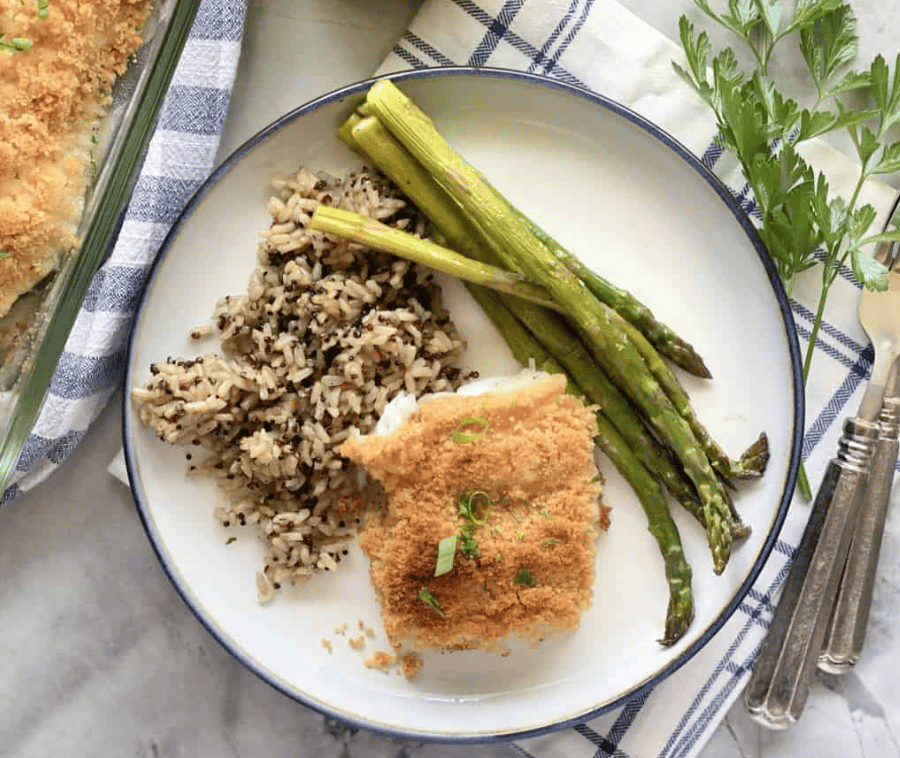
Serves 1–2 | Prep time: 10 minutes | Cook time: 20 minutes
Ingredients 🥒
1 fresh wild-caught white fish fillet (cod or haddock), ~5–6 oz
1/2 cup brown rice (uncooked)
6–8 fresh asparagus spears
1 tbsp olive oil (divided)
Sea salt, fresh parsley or thyme (optional)
Step-by-Step Instructions ✅
Step 1 - Cook the Brown Rice 🍚
Rinse 1/2 cup of brown rice under cool water.
In a small pot, add the rice and 1 cup of water.
Bring to a boil, then reduce to low heat. Cover and simmer for 30–35 minutes, or until tender.
Turn off heat and let sit, covered, for 5 minutes. Fluff with a fork before serving.
Step 2 - Prepare and Bake the Fish 🐟️
Preheat your oven to 375°F (190°C).
Line a baking dish with parchment paper or lightly grease it with olive oil.
Pat the fish dry and place it in the dish. Drizzle with 1/2 tablespoon of olive oil.
Sprinkle lightly with sea salt and fresh herbs like parsley or thyme, if using.
Bake uncovered for 12–15 minutes, or until the fish flakes easily with a fork.
Step 3 - Steam the Asparagus 👩🍳
Wash and trim the tough ends off the asparagus spears.
In a steamer basket over boiling water, steam for 5–7 minutes until just tender but still bright green.
Drizzle with the remaining 1/2 tablespoon of olive oil and a pinch of salt.
Step 4 - Plate and Serve 🍽️
Place a serving of brown rice on your plate.
Add the baked fish fillet and steamed asparagus.
Optional: Top with fresh herbs or a drizzle of extra virgin olive oil for flavor.
Why This Meal Is Migraine and Histamine Friendly ✅
Fresh white fish like cod and haddock are naturally low in histamine when cooked fresh (not aged or canned). They provide lean protein without common migraine triggers like nitrates or aged preservatives.
Brown rice is a whole grain that’s naturally gluten-free, bland in flavor, and rarely triggers migraines or histamine issues.
Asparagus is low in histamine and packed with antioxidants and fiber. It’s also a gentle, non-fermented veggie that won’t disrupt sensitive systems.
Olive oil is an anti-inflammatory fat that supports brain health and is well tolerated by most people with migraines or histamine intolerance.
Why It’s Low Glycemic 📊
The fiber in brown rice and asparagus slows down the absorption of glucose, preventing rapid blood sugar spikes.
Lean protein from fish also helps moderate blood sugar and insulin responses.
How did you like this week's email? |