- More Relief. Less Medication.
- Posts
- 🧠 How Your Brainstem Dictates Brain Function
🧠 How Your Brainstem Dictates Brain Function
The story of how your 5th cranial nerve plays a pivotal role in migraine management...


Dr. Erik Reis & Thompson Maesaka
May 27, 2026
In partnership with


Your hub for natural migraine management. More Relief. Less Medication.

Hey Migraine Mentees 👋
Today’s newsletter takes another 5 minutes to read—so if you’ve only got 60 seconds, here’s what you need to know:
The Trigeminal nerve plays a central role in migraine pain by transmitting sensory signals and releasing CGRP, a key inflammatory peptide…
CGRP-blocking medications like Ubrogepant and Emgality help reduce migraine symptoms but don’t address underlying inflammation or immune dysfunction…
Mast cells near the brain release inflammatory mediators that can activate the Trigeminal nerve and worsen migraine symptoms…
One study found that children who practiced relaxation imagery reduced both their migraine frequency and levels of the mast cell enzyme tryptase…
Daily habits like eating anti-inflammatory foods, sleeping consistently, managing stress, exercising, and identifying triggers can calm inflammation and reduce migraine attacks…
🌪️ Understanding the brain might feel like an enigma. That’s why we’re always trying to break things down to make them easy to digest and, more importantly, actionable.
The TLDR of this week’s newsletter is that there are things you can control, and things you can’t… So read through to find out what you can control, and go control it!
👋 We wanted to say “Sup” to the 141 new migraine mentees who joined us this past week!
🧠 The Migraine Mentors
First time reading?! Sign up HERE.
👉️ In This Week’s Edition…
🥡 Weekly “Take-Meme-Out”
Enjoy The Trip… 👀
🗒️ Read This Now!
The Trigeminal Nerve - The Epicenter of Migraine Pain…
🍴 Migraine-Friendly Recipe of the Week
Smoothie Bowls…
Six mature-friendly shades. One mascara that actually stays put.

Most mascaras promise length… then leave you with smudges, flakes, and clumps by lunchtime.
That’s why so many 50+ women are switching to PrimeLash.
It’s a tubing mascara designed for your lashes, wrapping each one to lift, define, and separate...even the ones that might be too small to see.
And when it’s time to take PrimeLash off? It slides right off with warm water. No rubbing or irritation.
From everyday black to soft brown, plus bold shades like Emerald, Burgundy, and Mulberry… there’s a color for every kind of day.
Get longer-looking lashes with zero smudge. Finally.
🥡 WEEKLY TAKE-OUT
Meme of The Week

🗒️ READ THIS NOW!
The Trigeminal Nerve - The Epicenter of Migraine Pain
If you've ever experienced a migraine that feels like the ice-pick sharp shooting pain radiating from behind your eyes, across your temples, or along your jawline, you're likely feeling the effects of the Trigeminal nerve system…
This major cranial nerve transmits sensory information from your face to your brain and plays a pivotal role in migraine pathophysiology.
When activated, the Trigeminal nerve releases inflammatory neuropeptides, including Calcitonin Gene-Related Peptide (CGRP), which contribute to inflammation and vasodilation in the meninges—the protective layers surrounding the brain.
This process, known as neurogenic inflammation, is a key factor in the development of migraine pain
💊 CGRP Medications - Targeting the Pain Pathway
CGRP (Calcitonin Gene-Related Peptide) as been identified as a critical player in migraine attacks.
Elevated levels of CGRP are often found during migraine episodes, which led to the development of medications that specifically target this peptide…
CGRP receptor antagonists, such as Ubrogepant and Rimegepant, and monoclonal antibodies like Erenumab and Galcanezumab, work by blocking the activity of CGRP, thereby preventing or reducing migraine attacks.
These treatments have shown effectiveness in both aborting acute migraine attacks and preventing their occurrence…
But they don’t work for everyone.
While these medications often address migraine symptoms, they don't tackle the underlying causes of CGRP release, such as systemic inflammation and immune system dysregulation.
But you already knew that… 😃
🔥 The Role of Inflammation and Mast Cells in Migraines
Emerging research continues to highlight the role of mast cells (immune cells involved in allergic responses) in migraine pathophysiology and symptom management.
Mast cells are located in the surrounding brain tissues and meninges and, when activated, release inflammatory mediators that can sensitize the Trigeminal nerve, contributing to migraine pain and symptoms.
Conditions like Mast Cell Activation Syndrome (MCAS) can lead to chronic over-activation of mast cells, resulting in persistent inflammation and increased susceptibility to migraine attacks…
Stress is a known trigger for mast cell activation, and stress-reduction techniques have been shown to decrease mast cell activity and migraine frequency.
One study even found that kids who practiced relaxation imagery significantly reduced both their migraine frequency and their levels of a key mast cell enzyme, suggesting that self-regulation techniques can directly impact inflammation-driven migraine pathways.
🧘♀️ Lifestyle Strategies to Reduce Inflammation and Migraine Frequency
While medications play a role in managing migraines, incorporating lifestyle changes can address the root causes of inflammation and reduce the frequency and severity of attacks.
If you’ve been a subscriber to our newsletter long enough, you know the importance of healthy habits in managing migraine symptoms…
Here’s where the rubber meets the road:
1. Adopt an Anti-Inflammatory Diet 🥗
Consuming a diet rich in anti-inflammatory foods can help mitigate systemic inflammation. Focus on:
Fruits and vegetables: Rich in antioxidants that combat oxidative stress.
Omega-3 fatty acids: Found in fatty fish like salmon, flaxseeds, and walnuts.
Whole grains: Such as brown rice and quinoa.
Lean proteins: Including poultry and legumes.
Avoid processed foods, excessive sugar, and known dietary triggers like aged cheeses, red wine, leftovers, and alcohol.
2. Maintain Consistent Sleep Patterns 🛌
Don’t you love when people tell you to just “sleep more”…? 😅
Irregular sleep can disrupt the body's natural rhythms, impair blood sugar regulation, and inherently increase inflammation…
The research suggest to aim for 7-9 hours of quality sleep per night and maintain consistent sleep and wake times.
The consistency in sleep and wake times allows your brain and body to get into a healthy rhythm to optimize healing and recovery.
3. Manage Stress Effectively 👿
As you’ve seen (and most likely experienced), chronic stress activates the body's inflammatory response.
We suggest to incorporate stress-reduction techniques such as:
Mindfulness meditation
Yoga
Deep-breathing exercises
Regular physical activity
Spending time with loved ones and friends
These practices can all lower stress hormones and reduce the likelihood of migraine attacks…
Especially when paired together in an integrative fashion with other stress-management techniques.
4. Regular Physical Activity 💪
As we’ve previously stated, “movement is the language of the brain”, and there’s no way to hack the benefits of exercise without putting in the hard work of doing it…
Studies continue to show that engaging in mild to moderate daily exercise can reduce inflammation and improve overall health, especially in the migraine population.
Activities like walking, swimming, or cycling for at least 30 minutes most days can be beneficial, so don’t overthink your physical activity program.
Chop Wood, Carry Water; Chop Wood, Carry Water - AKA Don’t Think, Just Do.
5. Identify and Manage Personal Triggers 🔱
We always suggest to keep a migraine diary to track potential triggers, including foods, environmental factors, and hormonal changes.
Identifying patterns can help in avoiding or mitigating these triggers…
And more importantly, you can take that information into your medical provider to help them think through your treatment options and care!
As you can see, there’s a lot of ways to create solutions for migraine symptoms, but you’ll never understand those benefits without actually trying them out…
Our goal is to consistently remind you that you’re in the drivers seat of your health, and with the right tools, education, and empowerment, you can improve your healing!
🧭 Want to keep learning how to get to the root of chronic migraine?
Subscribe, share this with a friend, and explore more free tools, blogs, and resources on our website:
And if you’ve got questions you want answered in a future newsletter—hit reply. Yes, we actually read every one of them!
💪 Keep Going!
🍴MIGRAINE-FRIENDLY RECIPE
Smoothie Bowl 🫐
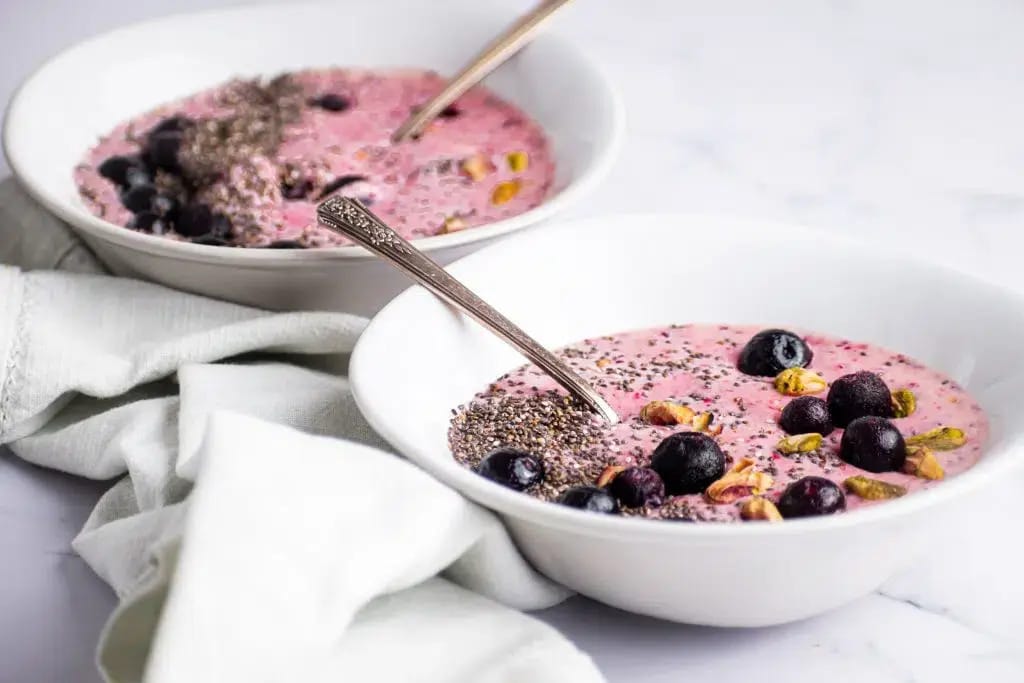
🥣 Ingredients
- 1 ripe banana: Fresh, not overripe
- 1/2 cup almond milk or coconut milk: Unsweetened and preferably without additives
- 1 tablespoon chia seeds
- 1/4 cup fresh blueberries
📖 Instructions
1. Blend the Base: In a blender, combine banana, and almond milk (or coconut milk). Blend until smooth.
2. Pour and Top: Pour the smoothie mixture into a bowl. Top with chia seeds and fresh blueberries.
3. Serve Immediately: Enjoy your smoothie bowl while it's fresh!
🎓️ Why This Recipe is Migraine and Histamine Friendly
Banana
A ripe but not overripe banana is usually tolerated well and provides natural sweetness and potassium, supporting energy levels. Overripe bananas can develop higher histamine levels, so sticking with just-ripe bananas is key.
Almond Milk or Coconut Milk
These milk alternatives are often lower in histamines compared to cow's milk. Choosing unsweetened versions without additives helps keep the recipe simple and free from common trigger ingredients like preservatives or flavorings.
Chia Seeds
Chia seeds are nutrient-dense, providing fiber and omega-3 fatty acids. They are typically considered safe for those with low-histamine dietary needs and add texture and nutritional value without introducing flavors that might be considered triggers.
Fresh Blueberries
Blueberries are packed with antioxidants and generally low in histamine, especially when consumed fresh. They add a natural sweetness and a bit of a tang without being prone to causing migraines for most people.
🤌 Customization Tips
Personal Sensitivity: Individual triggers can vary, so each ingredient should be tested for personal tolerance.
Adaptations: If any component is problematic, substitutions can be made. For example, arugula can sometimes replace spinach if better tolerated, or strawberries might be swapped for blueberries, given personal thresholds.
How did you like this week's email? |
1